Why Businesses Are Seeking a Modern Google Analytics 4 Alternative in 2026
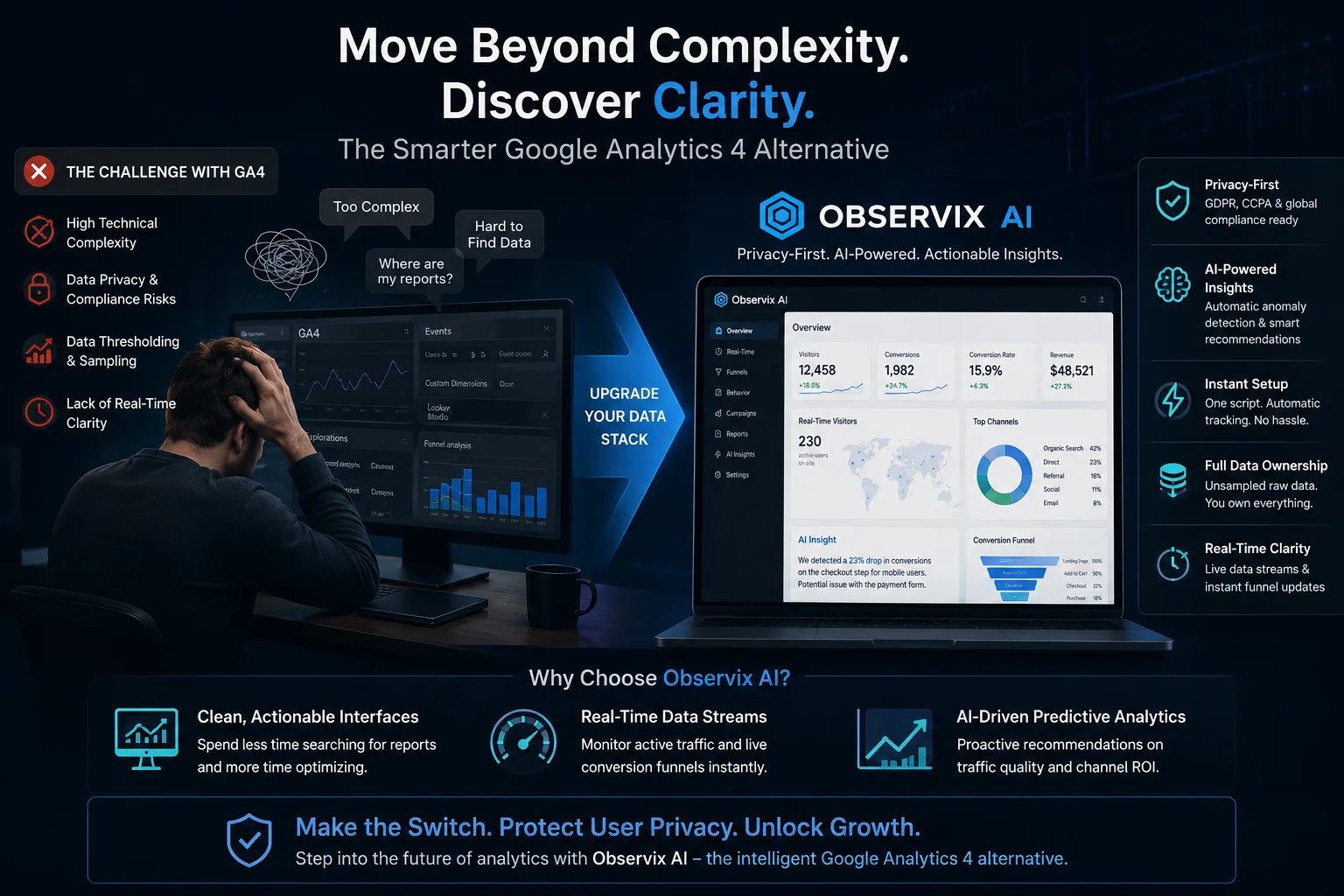
In today’s data-driven digital ecosystem, knowing how users interact with your digital platforms is critical for sustainable growth. For over two decades, Google Analytics served as the default standard for trackable web metrics. However, following the mandatory migration from Universal Analytics to Google Analytics 4 (GA4), thousands of digital marketers, data analysts, and business owners have faced unexpected friction.
From steep learning curves and fragmented reporting dashboards to growing European data privacy regulations (GDPR), the demand for a modern google analytics analog has surged dramatically. Companies no longer want complex configuration setups just to answer basic questions about user behavior.
The Core Challenges of Traditional Web Analytics
While GA4 introduced event-based tracking and cross-platform flexibility, it also brought significant usability challenges for everyday users:
-
High Technical Complexity: Simple reports that previously took two clicks in Universal Analytics now require custom event setup, custom dimensions, or Looker Studio integration.
-
Data Privacy & Compliance Concerns: Storing user data under unpredictable privacy frameworks creates compliance risks for EU-focused and international enterprises.
-
Data Thresholding & Sampling: Standard dashboards frequently hide granular details or sample heavy traffic streams, making precise attribution difficult.
-
Lack of Real-Time Clarity: Many teams find real-time monitoring and immediate funnel visualization unintuitive or delayed.
Because of these hurdles, decision-makers are actively evaluating google analytics 4 alternatives that combine privacy, clarity, and actionable intelligence out of the box.
Key Criteria for a Reliable Google Analytics Replacement
When searching for a seamless google analytics replacement, modern organizations look for a balance between depth of data and ease of adoption. The ideal platform should offer:
-
Privacy-First Architecture: Full compliance with GDPR, CCPA, and global privacy standards without requiring intrusive consent banners that lower conversion rates.
-
AI-Powered Insights: Automated detection of anomalies, friction points, and conversion drops without needing hours of manual data querying.
-
Instant Setup: Simple script installation that automatically captures core interactions without endless manual event tagging.
-
Transparent Data Ownership: Unsampled raw data processing where you retain complete control and ownership over your business metrics.
Modern web-analytics solutions focus on delivering instant clarity rather than overwhelming users with raw, unstructured logs.
Upgrading Your Data Stack with Observix AI
If you are looking for a powerful ga4 alternative, Observix AI offers a streamlined, intelligent approach to digital tracking. Designed to bridge the gap between high-level executive overviews and granular user-behavior insights, Observix AI simplifies tracking while boosting accuracy.
By exploring advanced solutions for web analytics, product managers and growth teams can easily map out customer journeys, identify bottlenecks, and make confident, data-backed decisions without technical overhead.
Key advantages of adopting a dedicated google analytics 4 alternative like Observix AI include:
-
Clean, Actionable Interfaces: Spend less time searching for reports and more time optimizing campaigns.
-
Real-Time Data Streams: Monitor active traffic and live conversion funnels with zero artificial delay.
-
AI-Driven Predictive Analytics: Gain proactive recommendations on where traffic quality is shifting and which channels yield the highest ROI.
Making the Switch to Next-Gen Analytics
Sticking with a tool simply because it is the legacy standard often costs businesses valuable time and actionable insights. Switching to a flexible, privacy-compliant google analytics analog enables marketing and product teams to move faster, understand user intent deeply, and protect visitor privacy.
If your organization is ready to move beyond complex dashboards and sampling limits, evaluating modern alternatives is the logical next step toward sustainable digital growth.
Share this article
Related Posts



Latest Posts